Assisted School Travel Program
Outdated systems jeopardising the safety of children with disabilities.
The Assisted School Travel Program is a key program at the NSW Department of Education providing transport for students with disabilities. Outdated and inefficient systems were jeopardising operations and, critically, student safety. I led the discovery and redesign to fix that.
Unwieldy, inefficient systems putting children at risk.
The Assisted School Travel Program provides transport for students with disabilities. Outdated and inefficient systems were jeopardising operations and, critically, student safety.
I led the discovery phase, which revealed that staff were struggling with fragmented information across multiple systems and relying heavily on manual workarounds. This inefficiency not only wasted time and resources but, critically, increased the risk of harm to vulnerable students. Staff were doing their best with a broken system but that's not always good enough when children's safety is involved.
Experience mapping revealed the true complexity.
To map the true complexity of the system, I developed personas and end-to-end experience maps representing key ASTP users. These research documents were critical in highlighting the systemic bottlenecks and identifying two essential design principles that would drive the rebuild.
Accessibility
Providing immediate, effortless access to crucial information without forcing staff to navigate complex menus or search through multiple screens.
Efficiency
Tailoring workflows to the most common tasks. By streamlining these, we could drastically reduce the time and effort required for routine tasks, allowing staff to focus on complex, high-value activities.


Collaborative design, tested with real users.
Co-design workshop
I facilitated a co-design workshop bringing together ASTP representatives and the core development team. This ensured we validated the user journeys while simultaneously aligning on technical feasibility. From there, I developed concept wireframes focused entirely on presenting the right information for each task at the right time. I worked on-site at the Department in regular consultation with the team to ensure rapid iteration.
Usability testing
The concept wireframes were tested with key stakeholders. I developed an interactive prototype and ran usability testing sessions with ASTP staff, who were asked to perform certain tasks using the prototype. The feedback from these sessions was used to produce the final deliverable: a full set of annotated wireframes handed over to the development team.
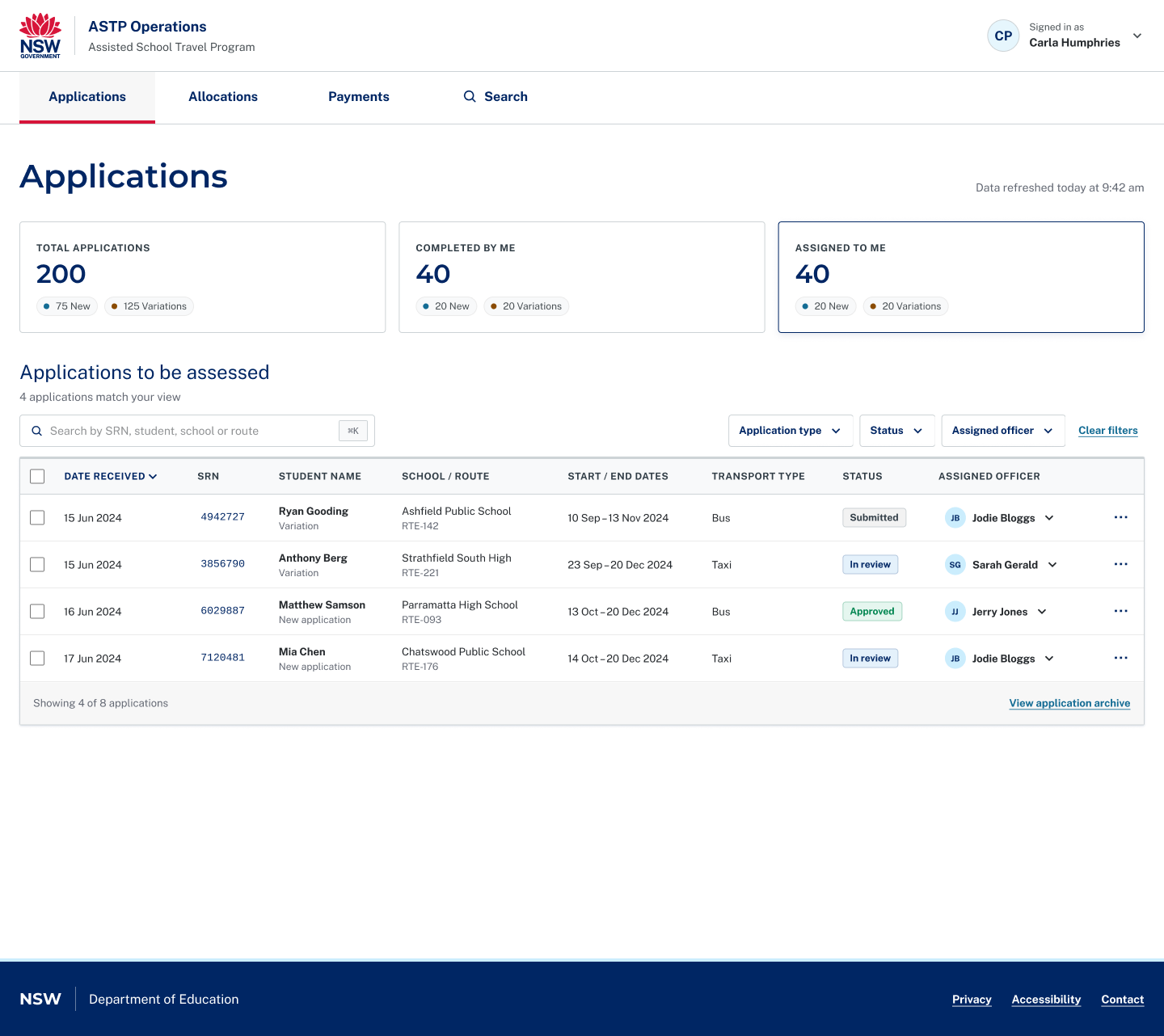
Comparing the original production interface designed within the Department's legacy portal constraints (2016) alongside how that same task-based information architecture translates into the modern Digital NSW Design System (2026).

This exploration maps the original information architecture and operational queue into the current NSW Government Digital Design System, incorporating Public Sans typography, Masterbrand color tokens, WCAG 2.2 AA status tags, and modern filters.
Simpler workflows. Safer children.
Task-based workflows and targeted dashboards transformed daily operations and made it easier to keep vulnerable children safe.
Staff could see and access everything they needed for a child's journey on a single screen. No switching systems, no paperwork.
The new task-based workflows completely transformed daily operations. The time it took to locate a vulnerable child's scheduled pickup or drop-off location was reduced from up to 2.5 minutes across multiple screens to just 7 seconds.
The ability to react instantly to common situations and access critical information reduced the risk of children being put in or left in dangerous situations, resulting in fewer incidents once the new system was in place.
Keep reading.
Project Fair Go
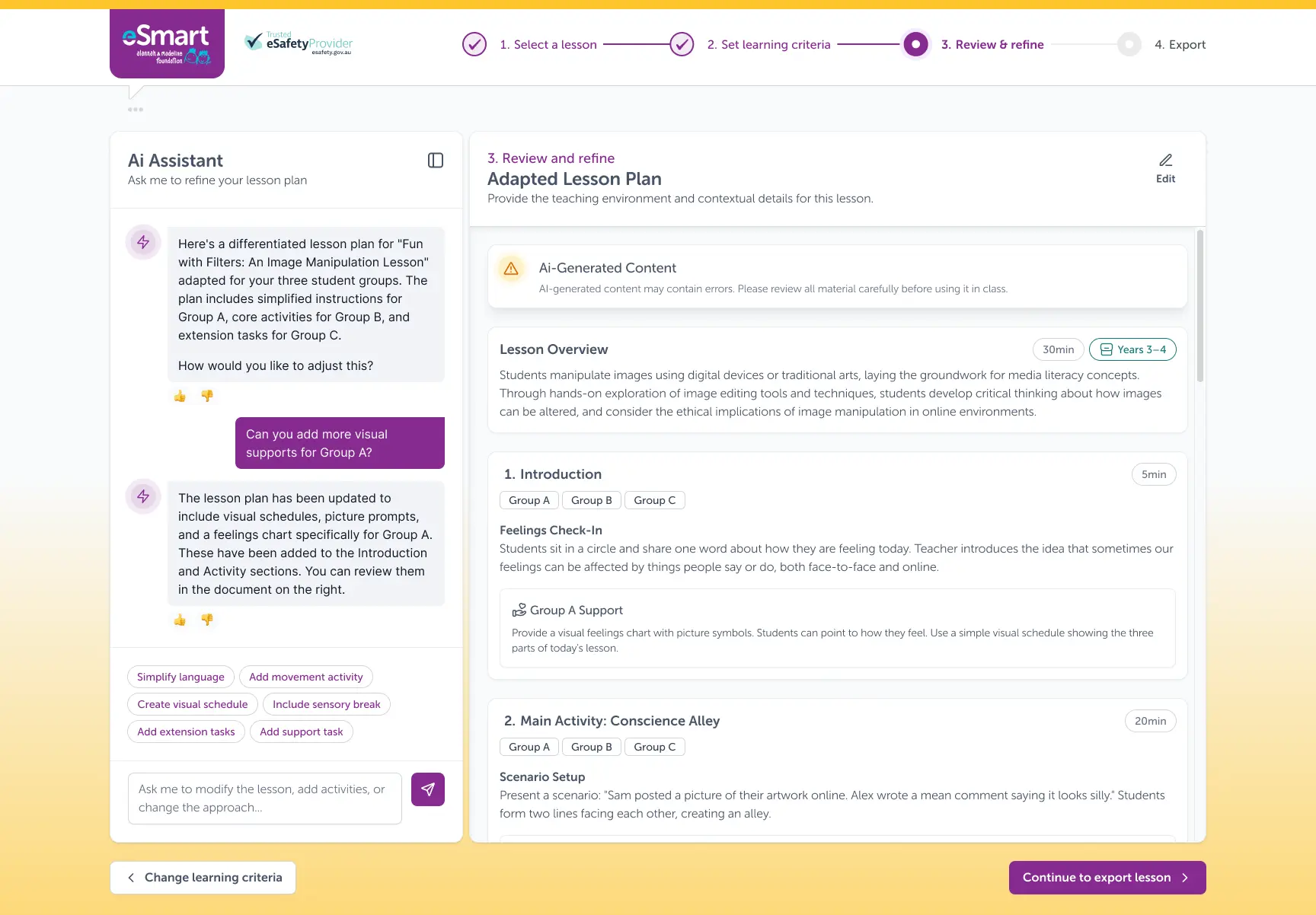
Teachers working with students with complex learning needs spend up to two hours preparing resources for every lesson they teach. The lesson plans existed. The resources to deliver them didn't.
Read the case study →Emergency Communications
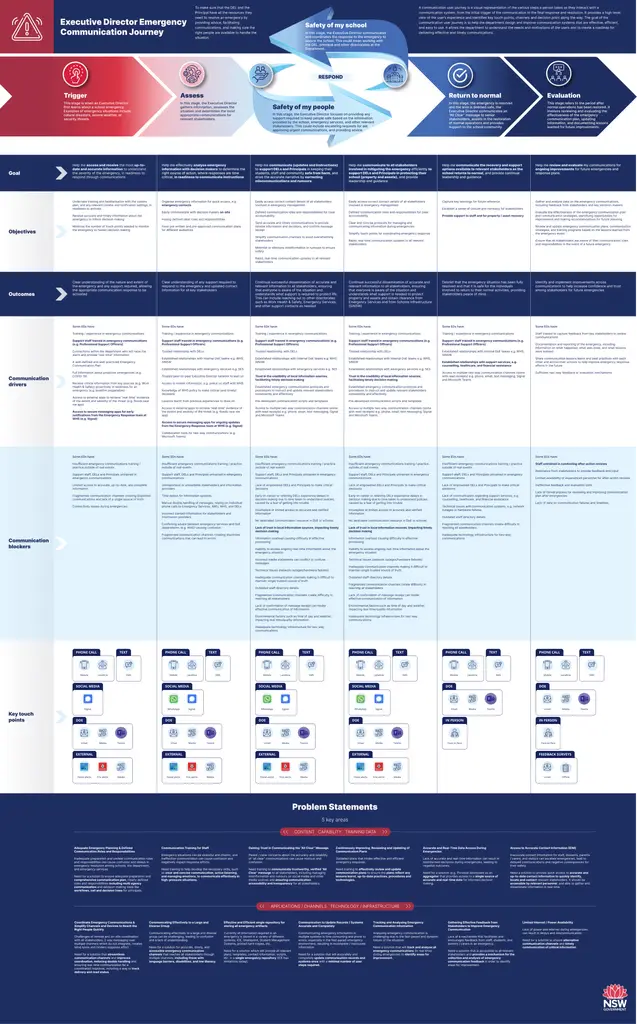
After a run of serious incidents during bushfire season, the Department knew its emergency communications weren't working but couldn't agree on why or what to do about it. I led the research across schools statewide, ran interviews with principals and department executives, and built the evidence base they needed. The final report secured approval for a full digital transformation within weeks of landing on the right desks.
Read the case study →