National One Stop Shop
One system to replace them all.
Clinical trials and medical research in Australia operate across a patchwork of state and territory legislation. Different rules, different systems, different processes in every jurisdiction. A researcher running a nationwide trial doesn't submit one application, they submit many. The National One Stop Shop is a Federal initiative to fix that. A single national platform covering everything from application to ethics approval, trial registration, and progress reporting. I led the UX design of the platform's first phase.
The same information. Submitted everywhere.
Australia's clinical research sector is held back by fragmentation. Every state and territory has its own legislation, regulations, and workflows. A researcher wanting to conduct a nationwide trial has to navigate each jurisdiction separately, submitting applications, satisfying ethics requirements, and filing progress reports across multiple systems, often providing the same information in slightly different formats each time.
The administrative burden is significant, the duplication is wasteful, and the cost falls on the researchers, sponsors, and health services trying to advance medical science. For patients and healthcare professionals, the fragmentation makes it difficult to find clinical trials relevant to their condition or their patients.
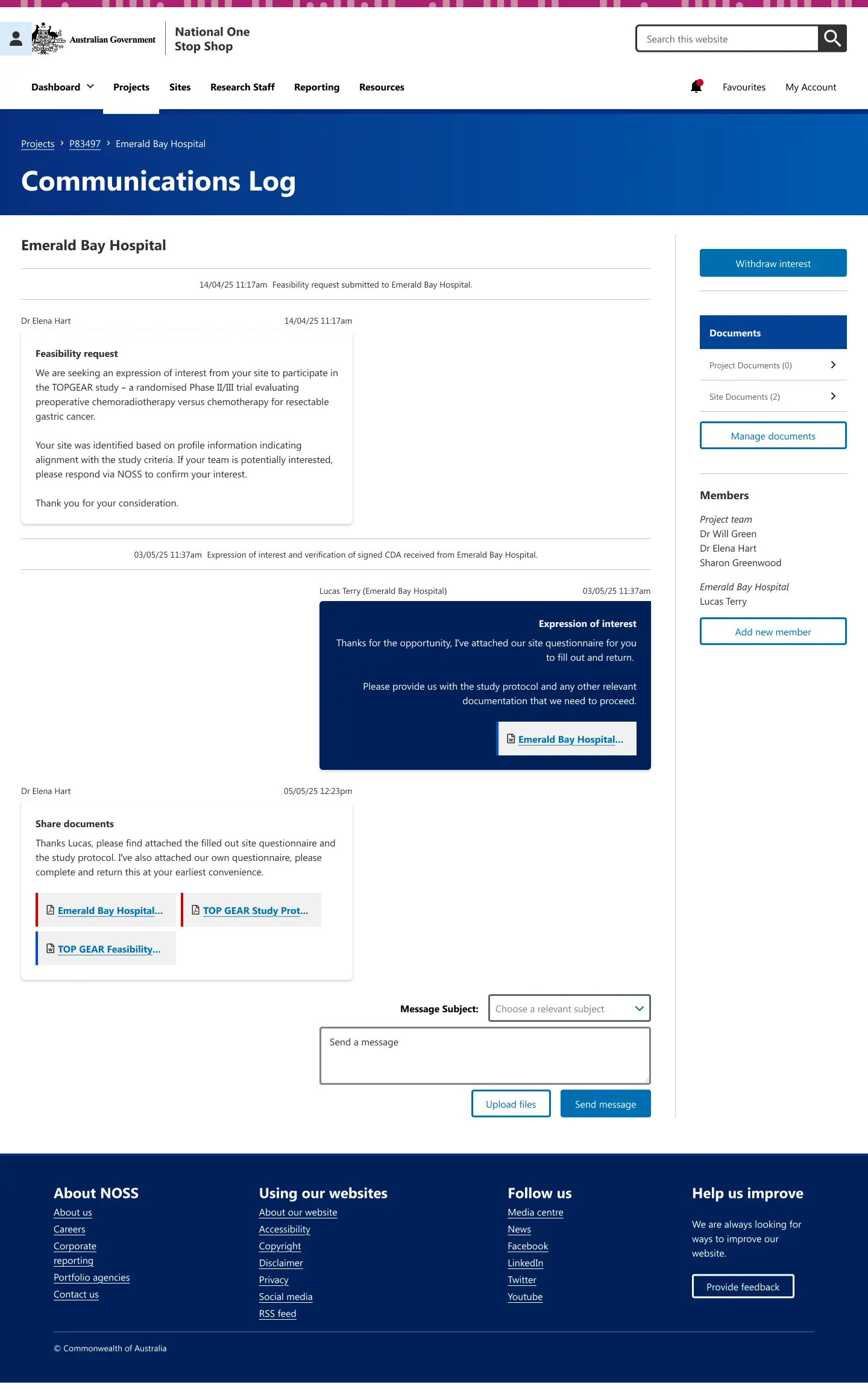
The National One Stop Shop is designed to address all of this. A single national system, recognised by the Therapeutic Goods Administration and the Office of the Gene Technology Regulator, covering the full lifecycle of a clinical trial from application through to published results.
Building the proof.
My role was to lead the UX design of the platform's first phase, a proof of concept that could demonstrate the initiative was feasible and would genuinely address the problems the sector had been living with.
There was no prescribed design direction from the Department, which meant a lot of the early work was about establishing principles and making calls. One of the ongoing challenges was separating what the system actually needed from what people assumed it needed because the old systems worked that way. A lot of the complexity we encountered wasn't inherent to the domain, it was inherited from years of fragmented processes that nobody had questioned. Part of my role was to keep asking whether a requirement was genuinely necessary or just a habit, and to make the call when the answer was the latter.
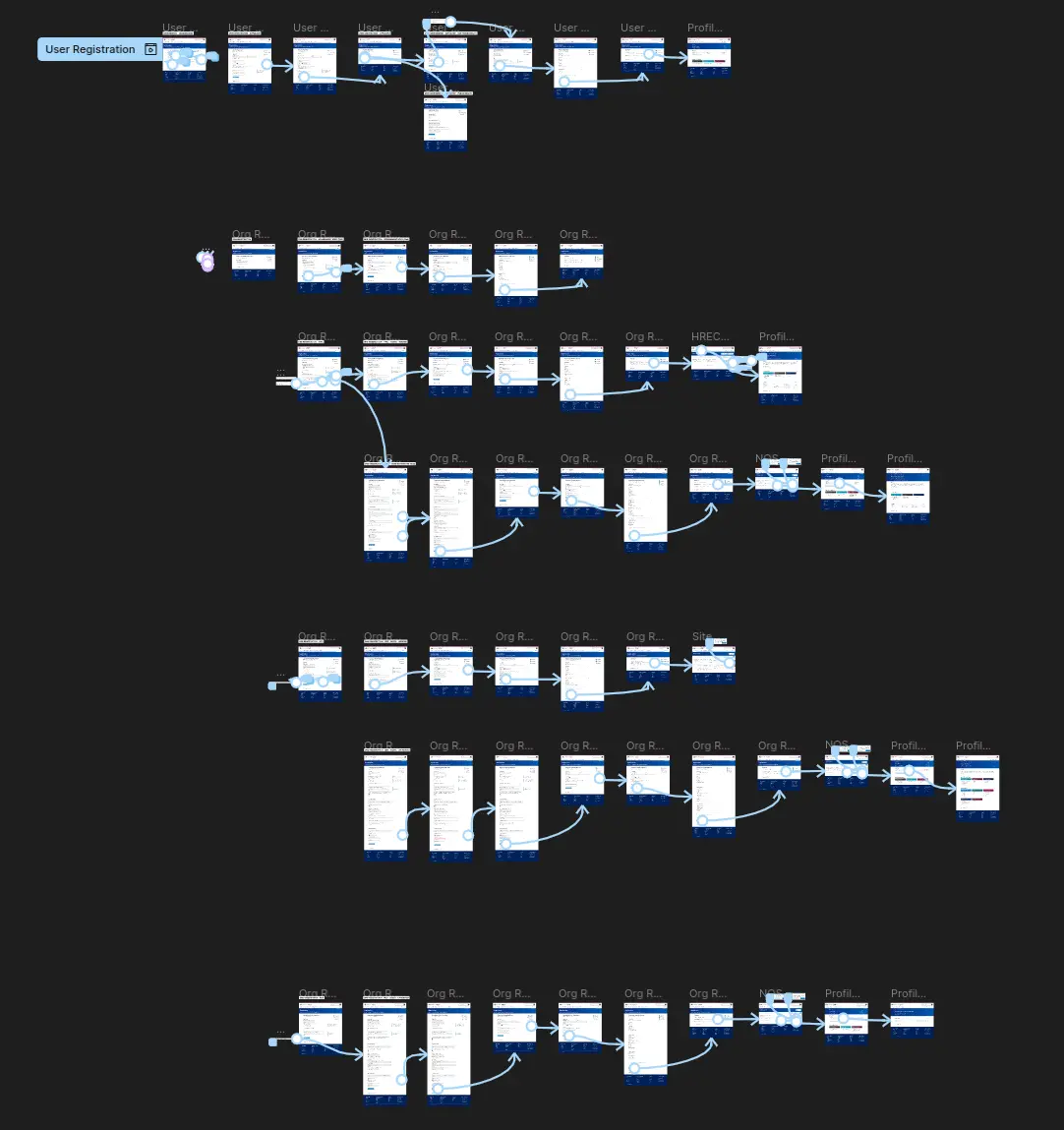
Working with a team of business analysts and designers, I led the translation of complex regulatory and workflow requirements into a coherent design system. We developed a library of reusable components built to handle the full complexity of a regulated federal system, and used these to build an MVP prototype covering the core application, ethics approval, and reporting workflows.
We worked in four-week sprints, engaging directly with stakeholders every couple of weeks. The design was constantly being tested against real feedback rather than assumptions, which kept the work grounded and meant we could move quickly without losing the thread.
The prototype needed to be detailed enough to be credible with a technically sophisticated audience, and clear enough to be understood by people coming at it from very different angles, from researchers and ethics committee members to healthcare providers and policy teams.
Two hundred people. Every state. Every territory.
With the prototype ready, I led a series of large-scale stakeholder sessions with clinical research communities across the country. Each session brought together around 200 participants from across the states and territories — researchers, healthcare professionals, ethics committee members, sponsors, and government representatives.
After presenting the prototype I facilitated structured feedback sessions to understand how people responded to the proposed workflows, what concerned them, and where the design needed to change. With sessions running every couple of weeks throughout the delivery cycle, there was a constant loop between what we heard and what we built.
Feasibility proven.
The proof of concept sessions demonstrated that a unified national research platform was feasible and would meaningfully address the inefficiencies stakeholders had been working around for years.
The system is designed to serve researchers, sponsors, healthcare professionals, ethics committees, health services, and patients — each with access to the information and workflows relevant to them.
The platform will reduce duplication by more than 50% in the application process, 35% in the Clinical Trials Notification process, and 60% in trial registration, freeing up significant time and resources across the research sector.
application duplication
The design system and component library established during this phase provide the foundation for the platform's ongoing build — consistent, reusable, and built to the security and compliance standards required of a Federal health system.
Keep reading.
Project Fair Go
Teachers working with students with complex learning needs spend up to two hours preparing resources for every lesson they teach. The lesson plans existed. The resources to deliver them didn't.
Read the case study →Assisted School Travel Program
 NSW Department of Education
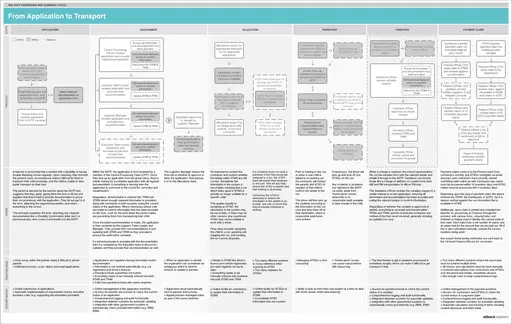
Staff coordinating transport for students with disabilities were working across multiple systems that didn't talk to each other — and the seven-second workflow that replaced two-and-a-half minutes of manual work.
Read the case study →