Emergency Communications
The problems were clear but there was no consensus on what they were or how to fix them.
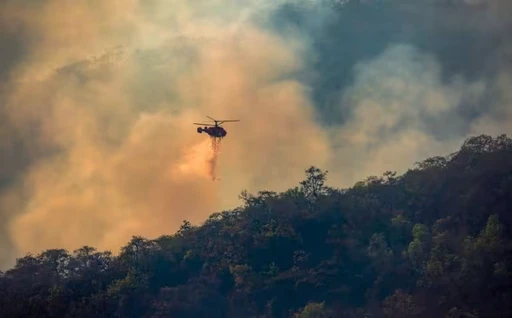
The NSW Department of Education is responsible for the safety of all staff, students and visitors across its vast network of schools during emergencies. After a series of critical incidents during bushfire season, the existing emergency communication systems came under scrutiny. I was brought in to find out what was really going on.
Not every emergency looks the same, but the system needs to handle all of them.
The NSW Department of Education holds ultimate responsibility for the safety of all staff, students, and visitors during emergencies across its vast network of schools. Following critical incidents, particularly during recent bushfire seasons, the existing emergency communication systems came under scrutiny due to heightened risks and fragmented responses.
While the need for improvement was clear, there were varying opinions on the precise problems and how to address them. I was brought in to understand what was actually going wrong, hear from the people dealing with it directly, and build the evidence needed to fix it.
Understanding the problem from all angles.
Given the diverse needs of schools across NSW, ranging from large metropolitan institutions to small, remote schools, I designed and executed two rounds of extensive research after completing a thorough review of all existing research and process materials.
The first round involved one-on-one interviews with thirteen participants from schools and Department executives statewide. We explored their needs, behaviours, challenges, and critical tasks related to emergency communications.
These insights informed a second round of group interviews with a similar set of participants, allowing us to further delve into the current state of emergency communications and validate potential improvements identified in the initial phase.
I carefully analysed each round to highlight important insights and consistent themes across the state, and presented back to stakeholders for feedback and further validation before starting on our final deliverables.
"Key findings included who actually had the authority to order the evacuation of a school in an emergency — it was not the principal, according to policy."
Personas, experience maps, and recommendations.
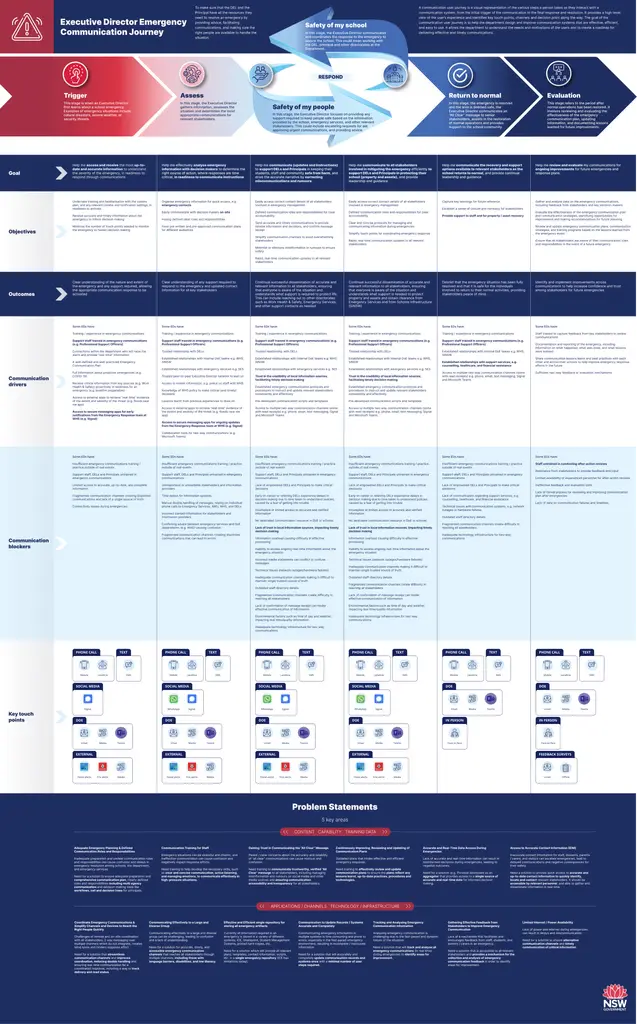
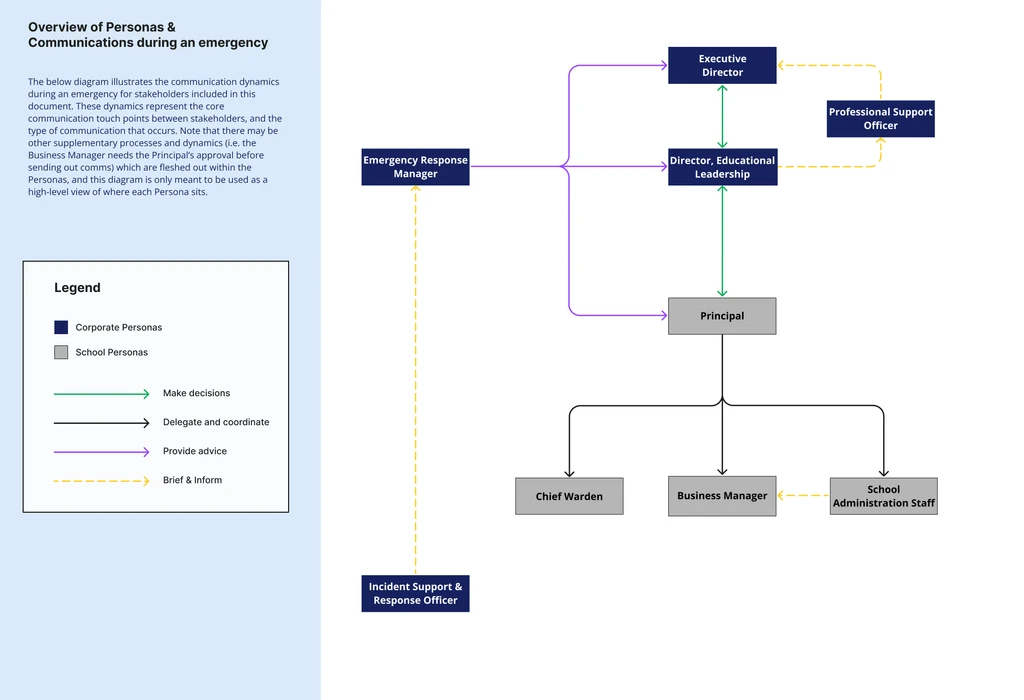
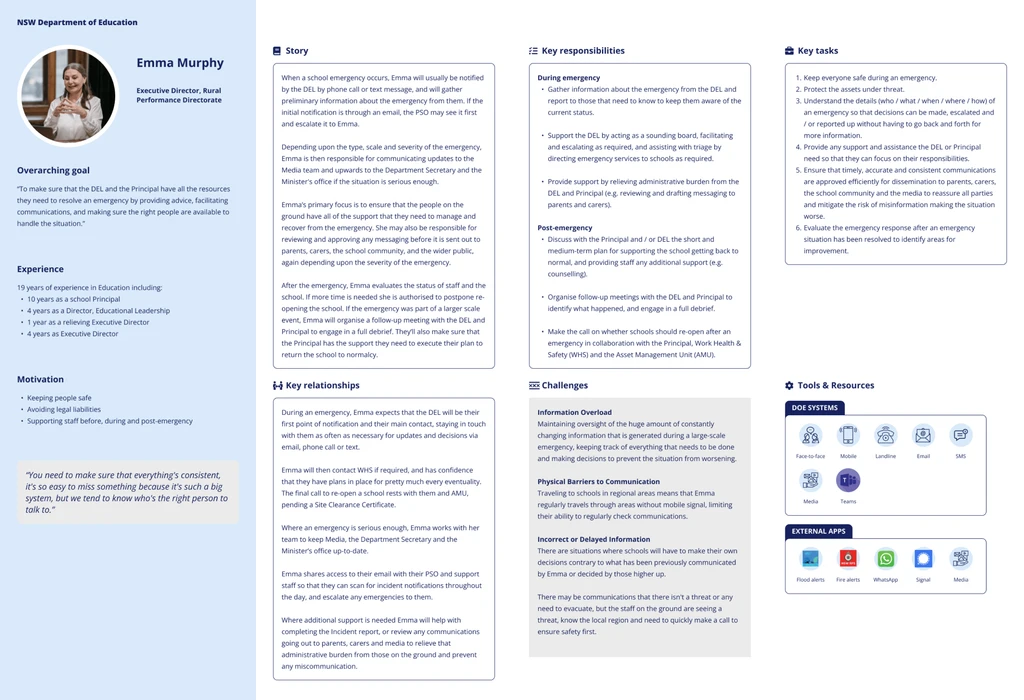
I created nine personas and corresponding experience maps representing stakeholders from schools and the Department of Education, detailing their roles and interactions during emergencies.
The final report provided a comprehensive analysis clearly linking each prioritised recommendation to specific personas and their journeys. This directly validated the need for digital transformation in a way that resonated with stakeholders.
Dynamic personas and experience maps
Given the complexity of the documentation and the need for easy consumption by busy executives, I used Figma's advanced component and prototyping features to create a dynamic, interactive experience rather than a static PDF.
I built a web-based portal that allowed decision-makers to easily switch between documents, expand sections, and access additional details through micro-interactions. We were only asked to produce static documents, but the interactive approach allowed executives to focus on high-level summaries or delve deep into the data as needed.
The outputs were shared at the highest levels of the organisation, became a key reference document throughout the rectification work, and the interactive approach was singled out by stakeholders as going well beyond what they expected.
Digital transformation approved.
The final report provided a compelling case for digital transformation, approved within weeks, and delivered practical, actionable steps that could be taken immediately, well beyond any digital solution.
The insights and recommendations in the final report provided a compelling case for the proposed digital transformation, leading to swift approval within weeks of its delivery.
The final recommendations extended beyond digital solutions, offering practical, immediate steps to enhance emergency response through policy adjustments and process standardisation across the state.
Keep reading.
Assisted School Travel Program
 NSW Department of Education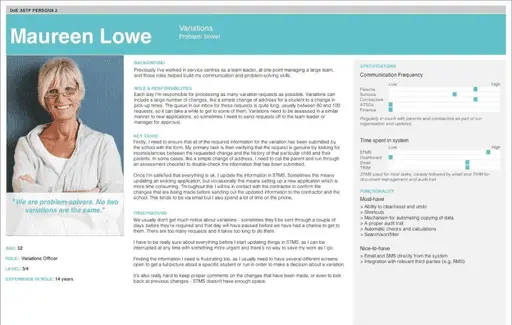
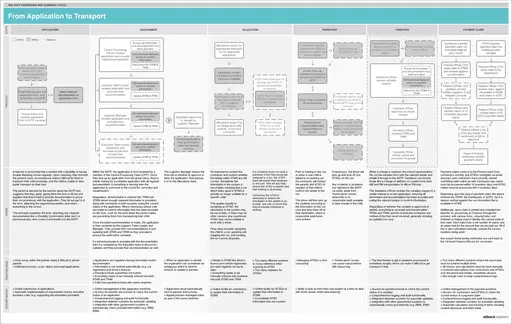
Staff coordinating transport for students with disabilities were working across multiple systems that didn't talk to each other — and the seven-second workflow that replaced two-and-a-half minutes of manual work.
Read the case study →Daily IQ
 Commonwealth Bank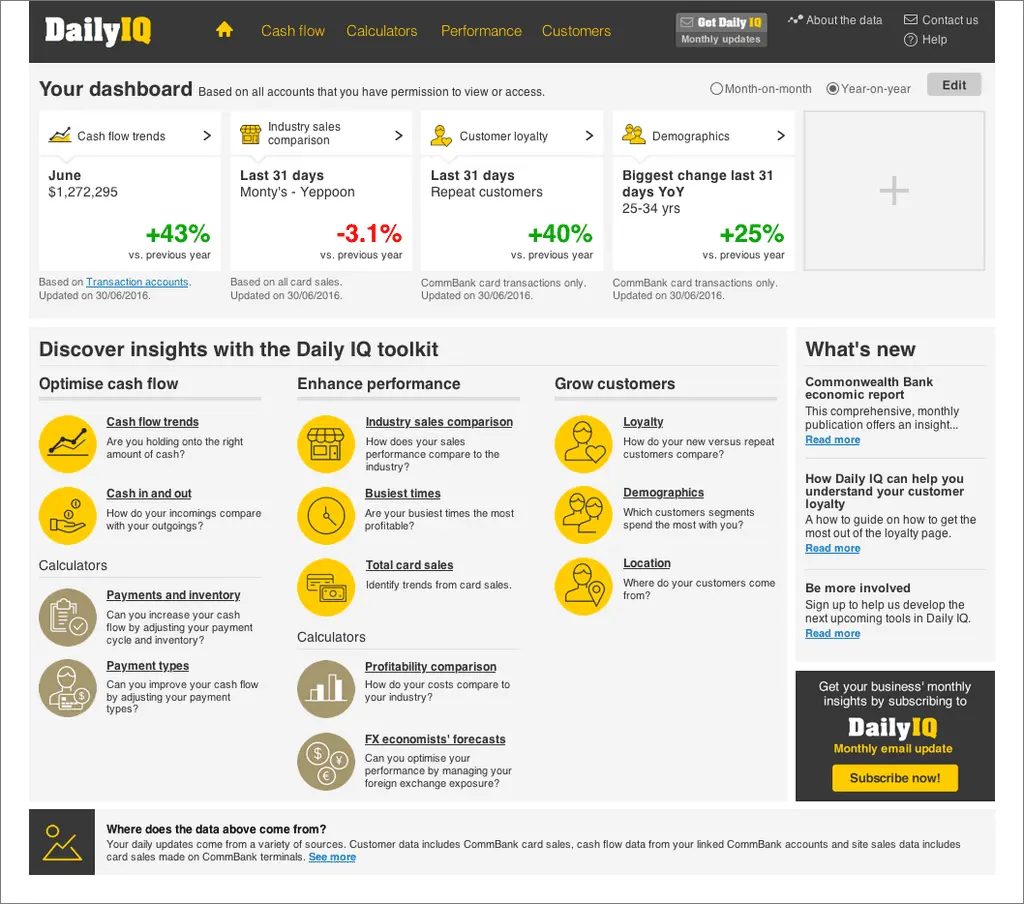
Commonwealth Bank had built a business analytics toolkit with genuinely useful data inside it. The problem was that almost no one was using it.
Read the case study →